

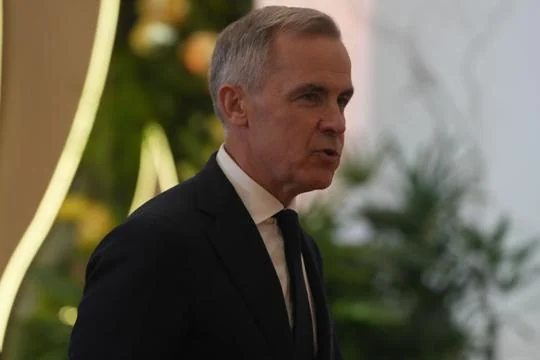
BEIJING — Prime Minister Mark Carney arrived in Beijing this week with a clear mission: open new trade doors. He left with a deal that reshapes two of the thorniest files between Canada and China — and a pointed message that Ottawa is hedging against an increasingly unpredictable United States.
The centerpiece is a reciprocal tariff rollback. Canada will slash its 100% tariff on Chinese electric vehicles — imposed in 2024 — to 6.1%, applied to the first 49,000 vehicles annually. In return, China will cut anti-dumping duties on Canadian canola seed from roughly 85% to 15%, with implementation expected by March.
The canola concession is a direct win for Canada’s Prairie provinces, where farmers have been squeezed by Chinese tariffs for years. The EV reduction, meanwhile, gives Chinese automakers a modest but symbolically significant foothold in the North American market.
The timing is no accident. More than 70% of Canadian exports flow south to the United States, and the Trump administration’s threats of tariffs up to 25% on Canadian goods — plus relentless pressure in trade negotiations — have pushed Ottawa to rethink its dependence on a single market. Carney’s stated goal is to double Canada’s non-U.S. exports within a decade, and China, as Canada’s second-largest trading partner, is central to that ambition.
After meeting with Chinese leaders, Carney said the relationship with Beijing has become “more predictable” than with Washington — a striking admission from a G7 leader. He described the package as “preliminary but landmark,” framing his approach as “value-based realism”: engaging with the world as it is rather than as one might wish it to be.
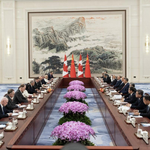
Beyond tariffs, the two sides signed multiple cooperation documents spanning trade, customs, energy, construction, culture, and public security. China also agreed to grant visa-free access to Canadian citizens, and the two countries will restart cultural exchange mechanisms. Beijing signaled openness to deeper collaboration in clean energy, digital technology, modern agriculture, aerospace, and finance.
For Carney, the Beijing trip is a bet that diversification is no longer optional. With Washington volatile and Chinese demand beckoning, Ottawa is testing whether a more balanced external economic posture is achievable — and whether “more predictable than the U.S.” becomes a durable selling point at home.