

BARCELONA — Sporadic clashes broke out in Barcelona and Madrid on Wednesday evening after hundreds of thousands of workers and housing activists joined Spain’s first nationwide general strike in 14 years, demanding affordable housing and higher wages just weeks before a snap general election.
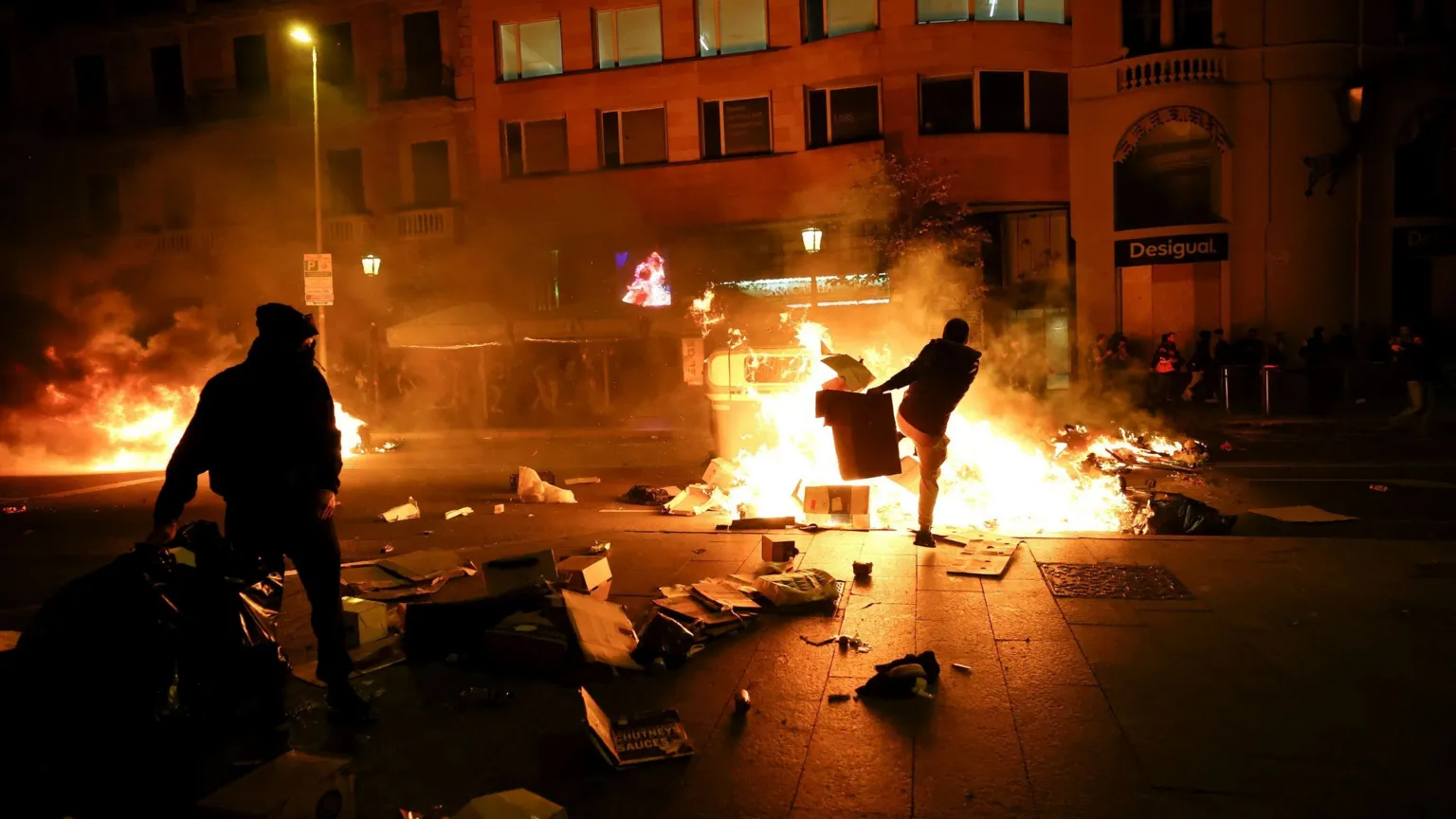
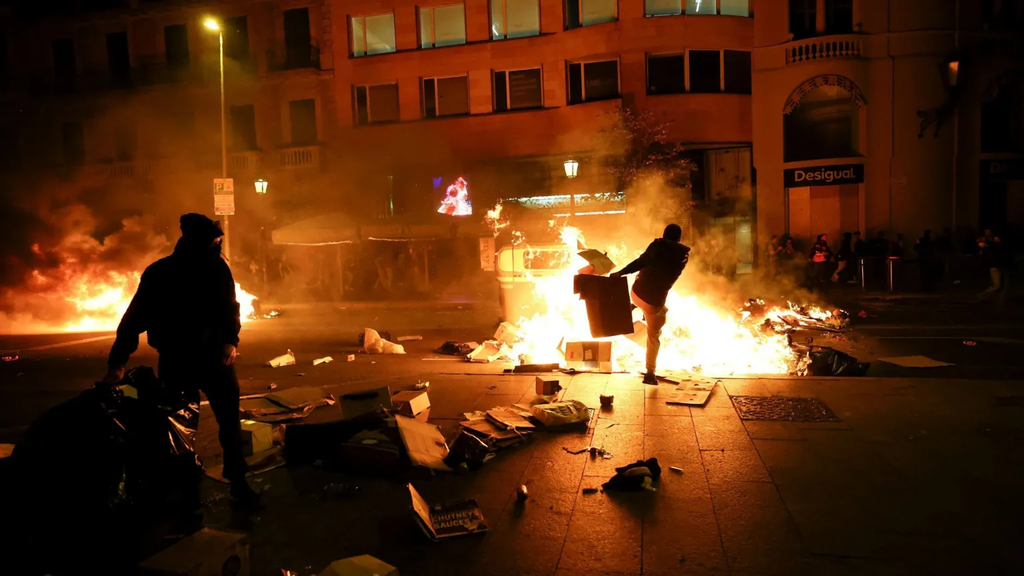
Police fired tear gas and rubber bullets to disperse groups of masked demonstrators who set fires and hurled projectiles after the main marches concluded. In Barcelona, rubbish skips, bicycles and potted plants were engulfed in flames along the Passeig de Gràcia, where authorities estimated 55,000 people had marched earlier in the day . Hooded protesters smashed storefronts, including an Apple store, and launched fireworks at riot police . At least 18 people were arrested in Barcelona, while police nationwide reported dozens more detentions .
The 24-hour walkout, called by Spain’s two largest unions, UGT and CCOO, alongside tenant associations, was the first general strike since 2012 and the first driven primarily by housing unrest . Authorities estimated 120,000 demonstrators filled Madrid despite heavy rain, with tens of thousands more rallying in other cities .
At the heart of the discontent is a housing crisis that has pushed rents to untenable levels. Spain faces a deficit of roughly 750,000 homes, a figure the central bank projects will exceed one million by 2028 . The average monthly rent of €1,176 now equals about 98.7 per cent of a young person’s average salary, according to the Youth Council of Spain . The movement gained momentum after the eviction and subsequent death of an 87-year-old Madrid pensioner became a rallying symbol .
Unions claimed strong participation in strategic sectors—90 per cent in automotive and ports, 85 per cent in meat processing—and pointed to a 10 per cent drop in electricity demand as evidence of disruption . Business lobby CEOE dismissed the strike as a “failure,” estimating overall participation at just 5 per cent .
The timing is politically charged. Prime Minister Pedro Sánchez called the Nov. 29 election after his minority government failed to secure parliamentary approval for housing measures proposed in response to earlier protests . His Socialist Party trails in polls, and the right-wing opposition has accused unions of campaigning on his behalf. Union leaders maintained the strike was planned before the election was called.