
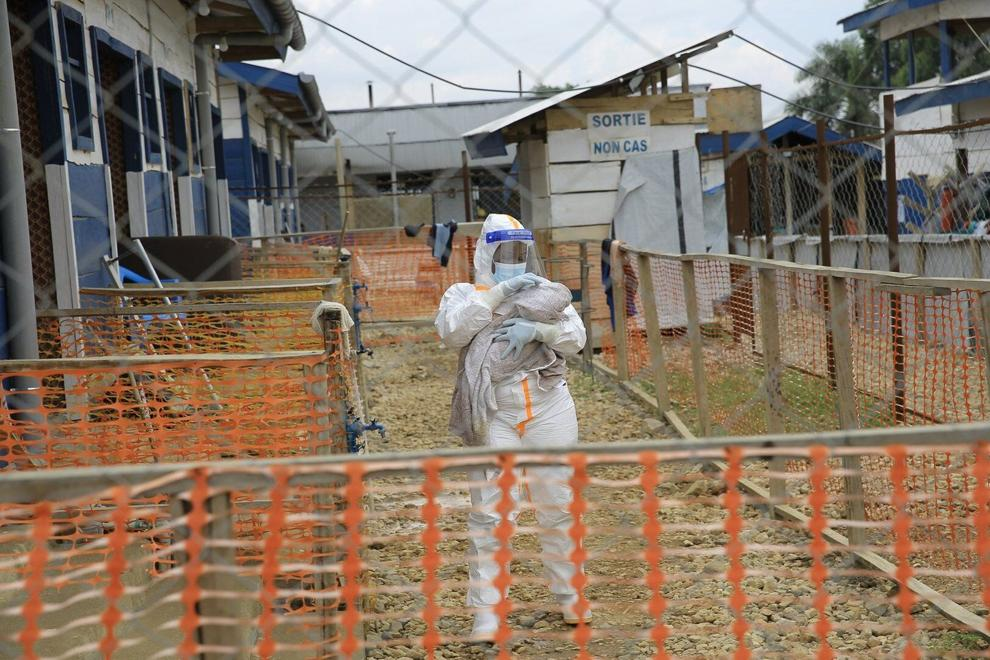
The Democratic Republic of the Congo’s deadliest Ebola outbreak on record has now surpassed 11,000 confirmed cases, with the Bundibugyo virus responsible for the deaths of more than 5,300 people—a case fatality rate of nearly 49 per cent.
According to the latest figures from the World Health Organization and Africa CDC, the DRC has reported 10,920 confirmed cases and 5,323 deaths as of Nov. 7, with the crude case fatality ratio standing at 48.7 per cent . The WHO’s Director-General confirmed in a member state briefing on Nov. 11 that almost 11,000 confirmed cases and more than 5,300 deaths have been reported across eight provinces .
The outbreak, which was declared on May 15, has become the second-largest Ebola outbreak on record and the fastest-growing, according to WHO and Congolese authorities . The Bundibugyo species is particularly challenging because there is no licensed vaccine or specific treatment approved for it, unlike the Zaire ebolavirus that caused the massive 2014-2016 West African epidemic .
Transmission remains concentrated in Ituri province, which accounts for nearly 70 per cent of cumulative cases, though North Kivu now contributes almost as many new infections and accounted for 46 per cent of cases reported in the most recent reporting period . The national seven-day average has plateaued at 65 to 67 confirmed cases per day since early October, well below the mid-August peak of 94 but still at a high level .
The outbreak has spread beyond Congo’s borders, with Kenya reporting nine cases linked to an imported case—including two deaths—and Nigeria confirming one imported case . Kenya discharged its final patient in early November and began the 42-day countdown to being declared Ebola-free .
Insecurity has emerged as one of the greatest obstacles to the response. During an attack on the town of Cantine-Aloya last week, 66 civilians were killed, including three health workers, and three health facilities were looted and burned. More than 1,000 contacts have been lost to follow-up, and three confirmed cases remain unaccounted for . WHO Director-General Tedros Adhanom Ghebreyesus warned that “we cannot mistake progress in some places for control of the outbreak as a whole” .
Vaccine trials are underway, with a trial using the Ervebo vaccine—approved for Zaire ebolavirus but not Bundibugyo—having begun last month. WHO expert groups have recommended adding two candidates developed specifically for Bundibugyo virus: ChAdOx1 BDBV from Oxford and the Serum Institute of India, and Moderna’s mRNA-1469 . Nearly 3,000 people have recovered from the disease so far .