

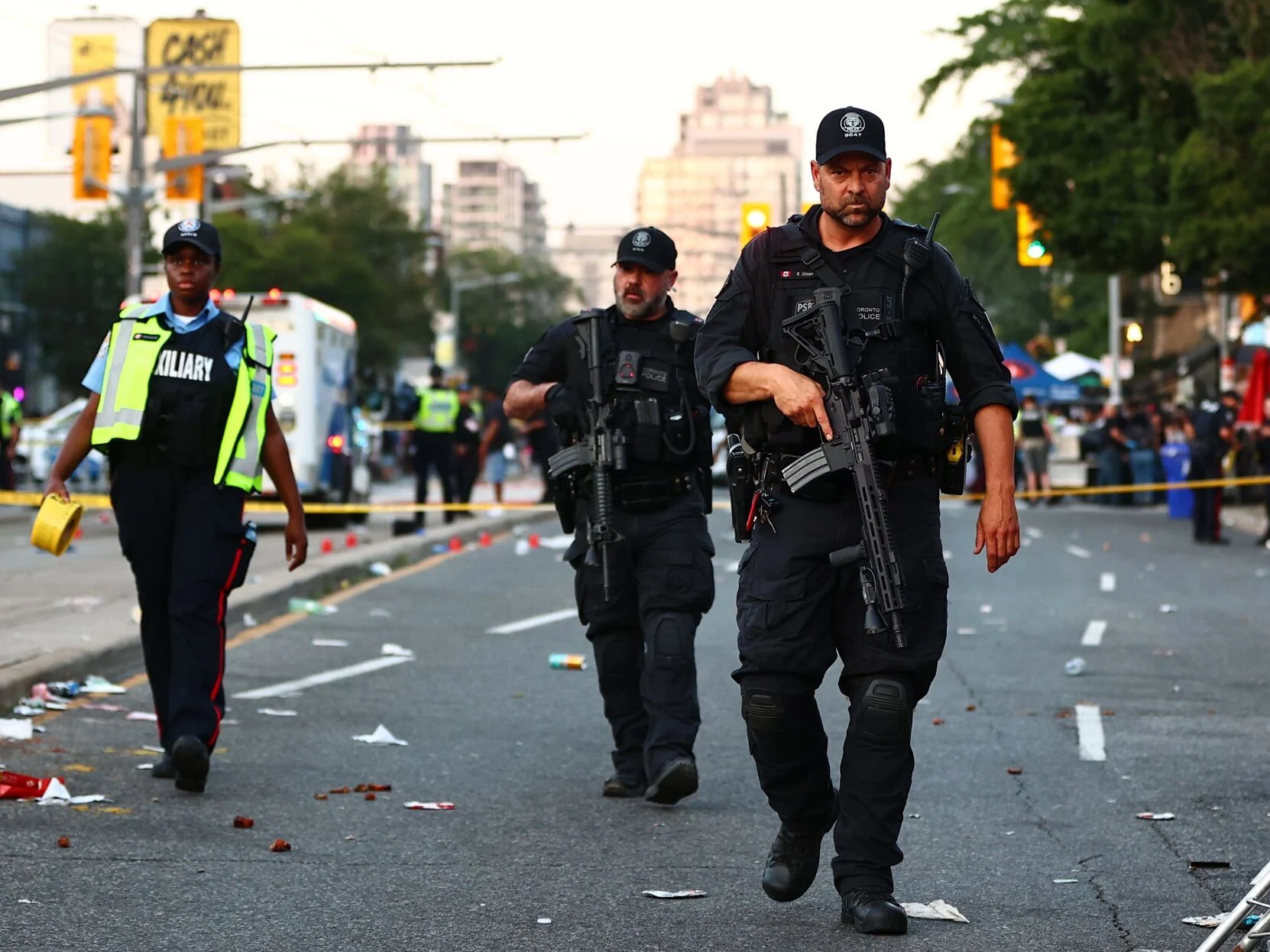

In the past two years, the number of homicides and shooting incidents are down in Toronto, across Canada and the United States. The question is, why?
An analysis of Statistics Canada’s Crime Severity Index, police open-data portals and other statistics shows most major crime indicators steadily falling, and generally falling over time, with the most recent numbers showing historic declines.
The national picture is stark. Statistics Canada reported in July that Canada’s Crime Severity Index dropped 4.9 per cent in 2025, the second annual decline in a row, while the homicide rate fell to its lowest level since 2014 . The country recorded its biggest year-over-year drop in the murder rate in 40 years, driven largely by a sharp decline in lethal violence within the Greater Toronto Area . The Toronto census metropolitan area saw 133 homicides in 2024 but just 64 in 2025—a shift that Statistics Canada analyst Roxane Brulin attributed largely to “fewer gang related homicides involving a handgun” .
Toronto-specific data confirms the trend. Toronto Police Chief Myron Demkiw said in October that shootings were at 20-year lows, with 62 incidents so far in 2026—down 20 per cent year-to-date compared to the previous year . Homicides have remained at similarly low levels through 2026, despite high-profile incidents like the Salsa on St. Clair shootings in July .
The decline extends south of the border. FBI data showed violent crime in the United States fell 9.3 per cent in 2025—the largest year-to-year decline since the bureau began estimating crime trends in 1936—with murder down 18.1 per cent and robbery down 18.5 per cent .
Experts point to several factors. University of Toronto sociologist Jooyoung Lee noted that taking a longer historical view back to the 1980s and 1990s shows shootings have been “declining pretty steadily” . Toronto Police have credited proactive policing and partnerships, while acknowledging that crime trends are complex. “There’s no one single thing that drives them up and there’s no one single thing that drives them down,” Demkiw said .
But the data tells a different story than public perception. Pollsters say Canadians’ fear of crime persists despite the numbers, shaped by visible issues like homelessness and addiction, and by high-profile incidents that dominate news coverage . “The data tells us a story that we’re going in the right direction downwards, but the sense of safety and security is not necessarily connecting with the data,” Demkiw said .
Catherine Latimer of the John Howard Society of Canada argued that the politicization of crime has inflated public fears. “The politicization of crime has led to an inflated idea of how much crime is actually occurring within Canada and raising real strong public concerns about it that don’t match the reality,” she said .